Taiwan Oolong Tea Regions: A Taster's Guide to Flavor Profiles
Taiwan is a small island with an outsized reputation among oolong drinkers, and geography does most of the talking. Drive two hours in any direction from a tea town and you cross a climate zone: sea-level terraces in the north, fog-wrapped ridges above 2,000 meters in the center, and warm lowlands where leafhoppers leave their mark on summer leaves. Each of those places gives you oolong that tastes like where it grew.
What follows is a taster's map. Not a ranking, not a shopping list — a way to connect the name on a bag to the flavors you should expect, and to know which questions are worth asking before you buy.
Why Elevation, Fog, and Season Shape the Cup
High-mountain tea gardens in Taiwan sit in cool air that slows the leaf's growth. Slower growth generally means thicker leaves, denser texture in the brew, and aromatics that read as floral and creamy rather than sharp and grassy. Add heavy morning fog, which softens sunlight, and large day-to-night temperature swings, and you get the conditions behind the island's most famous teas.
Harvest timing matters just as much. Spring tea tends to be fragrant and lively; winter tea, picked later in the year, is often described as denser and sweeter with a longer finish. Winter high-mountain lots are the ones competitions and collectors chase hardest.
Two things are not determined by the mountain, though: oxidation level and roasting. A grower can make a lightly oxidized, unroasted tea or a darker, charcoal-roasted one from the same bushes. The region sets the ceiling; the maker decides the character.
Nantou: Dong Ding, Shanlinxi, and the Roasting Tradition
Nantou County is the heartland of Taiwanese oolong, and Lugu Township is its historic center. Dong Ding oolong comes from slopes around 1,000 to 1,200 meters, and the traditional style is ball-rolled, moderately oxidized, and finished over charcoal. Expect toasted grain, brown sugar, roasted nuts, a warm spice note, and a long sweet aftertaste. Modern versions are often lighter and more floral, so if you want the classic profile, look for words like "traditional" or "medium roast" on the label.
Shanlinxi, in Zhushan Township, sits higher — roughly 1,600 meters — and produces a very different cup: sugarcane sweetness, butter, orchid, and a creamy middle that holds up through several infusions. It is often the tea that converts people who think they dislike oolong.
The Lugu Farmers' Association runs one of the island's best-known winter competitions, which is why Dong Ding names carry so much weight in the market.
Chiayi's High Mountains: Alishan, Meishan, Zhushan
Alishan is the name most drinkers meet first, and the classic profile is easy to recognize: lilac and gardenia up front, a buttery texture, and a clean, cool finish. Gardens run from about 1,000 to 1,700 meters across villages such as Shizhuo, Shibi, and Zhangshu Lake, and the best lots are lightly oxidized with little or no roast.
Neighboring areas are worth knowing because they offer similar pleasure at gentler prices:
- Meishan — often more grass and less perfume than Alishan, but solid body and sweetness.
- Zhushan — a broad area that includes Shanlinxi; quality varies widely by elevation.
- Taipingshan — a cooler, higher pocket where leaves can taste almost minty-fresh.
The Taichung Highlands: Lishan, Dayuling, and Wuling
Head into Taichung's Heping District and the numbers climb: 1,700 meters, 2,000, sometimes 2,600. At these altitudes the growing season is short and yields are low, which is why these teas cost what they do. The flavor shifts from perfume to fruit — pear, green apple, alpine herbs — with a thick, almost oily body and a sweetness that lingers for minutes.
Dayuling, grown near the high pass on the road toward Hehuanshan, is often made from the Qingxin cultivar and reads as delicate, cool, and quietly sweet rather than loud. Because the names carry prestige, "Lishan" and "Dayuling" appear on plenty of tea that never saw those mountains. Ask for elevation, harvest season, and harvest date; a serious seller will know all three.
Northern Taiwan: Wenshan Baozhong and Muzha Tieguanyin
The north plays a different game. Around Pinglin in New Taipei, Wenshan Baozhong is made in a strip style rather than rolled into balls, oxidized lightly — around 10 to 15 percent — and left unroasted. The result is soft, lilac-scented, and green without being vegetal, closer to a fresh high-mountain oolong's delicate cousin. Brew it a little cooler than you would an Alishan tea and it stays sweet instead of turning bitter.
In Muzha, on the edge of Taipei, Tieguanyin gets a heavier hand: more oxidation, then a real roast, sometimes over charcoal. Caramel, dark plum, a faint sour-fruit note, and a mineral finish that stays on the tongue. It is a very different animal from the greener Tieguanyin most people know.
Hsinchu and Miaoli: Oriental Beauty and the Leafhopper
Oriental Beauty — Dongfang Meiren, also called Bai Hao — comes from Beipu and Emei in Hsinchu County and from Miaoli. It is picked in summer, when small green leafhoppers bite the young leaves. The plant's response to that bite is what produces the tea's signature: honey, muscatel, ripe peach, and a cinnamon-like warmth. Oxidation runs high, often 60 to 70 percent, and the finished leaf is loose and twisty with silvery tips.
Because the leafhoppers have to survive for the flavor to develop, growers leave the summer crop untreated. That is a practical fact of the style rather than a marketing claim, and it is one reason this tea tastes like nothing else on the island.
How to Taste the Regions Side by Side
The fastest way to learn Taiwanese oolong is to stop drinking one tea at a time. Buy small amounts of three regions, then brew them together on the same afternoon. Keep everything identical except the leaf:
- Use the same water, the same vessel, and the same leaf-to-water ratio — about 5 grams per 100 to 150 milliliters.
- Start at 90°C for high-mountain oolongs and Baozhong, and go nearer boiling for roasted Dong Ding or Oriental Beauty.
- Keep infusions short: 30 to 45 seconds for the first, then add time gradually.
- Taste blind if you can. Write down three things only — aroma, texture, finish.
You will notice that elevation shows up as texture and length, while processing shows up as color and roast. After a few rounds, the words on a label start meaning something in the mouth.
When you buy, favor sellers who list elevation, harvest season, and cultivar, and who are willing to tell you what the tea is not. Buy 25 or 50 grams before committing to a larger bag. Store leaves away from light, heat, and strong smells, and drink the light, floral styles within a year while roasted teas can rest and soften for longer.
One last tip: keep a notebook. Taiwanese oolong rewards memory, and the third or fourth time you taste a region, you will recognize it before you read the label.
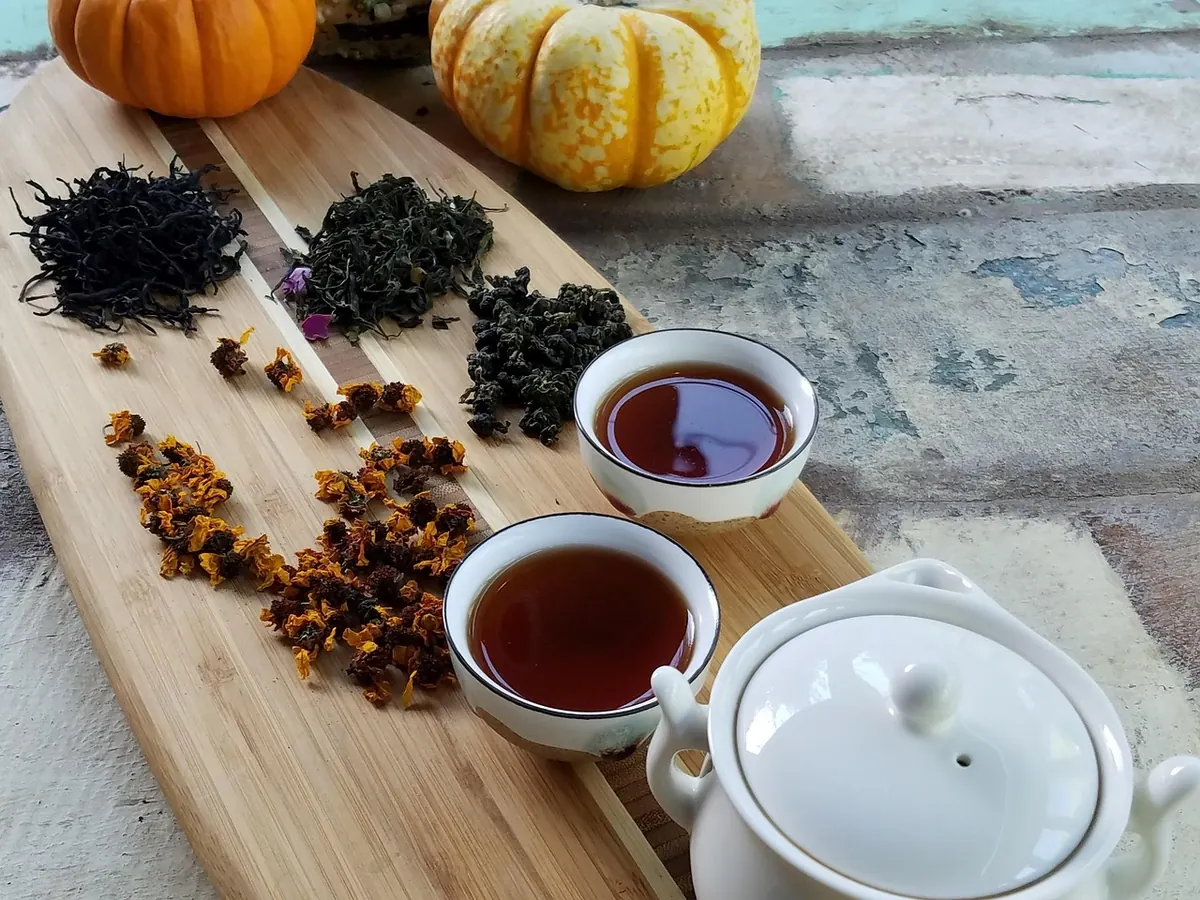
Photo: farwestteatraders / Pixabay
Autumn Tea Pairings: 6 Warming Teas and Simple Snacks for Cool Evenings
Six fall tea pairings that match spiced, roasted, and earthy brews with easy snacks — cardamom-apple...
How to Read Tea Labels: Decoding Origin, Grade, and Harvest Terms
Tea labels are easier to read once you know which words describe origin, grade, harvest, and freshness....
About Us